
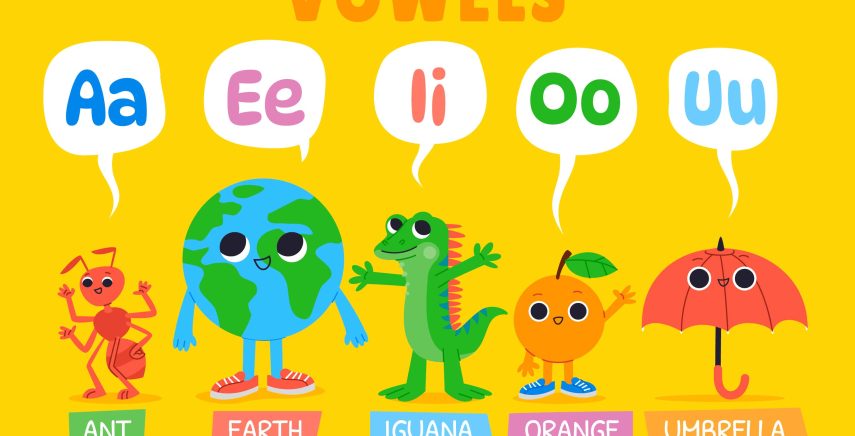
Why Vowels are the building blocks of words, and understanding them will help you speak and write better. Let’s dive into the world of vowels!
What Are Vowels?
Vowels are special letters in the alphabet. In English, the vowels are A, E, I, O, U, and sometimes Y. These letters make sounds that are different from consonants. Vowels help us make smooth sounds when we speak.
The Role of Vowels in Language
Vowels are very important for making words. They connect with consonants to form words we can say and understand. For example, the word “cat” has the vowel “a.” Without vowels, words would be hard to say.
Historical Perspective
Vowels have been part of languages for a long time. Ancient people used vowel sounds to speak clearly. Over many years, vowels changed and grew into what we use today.
Vowels and Consonants: The Perfect Pair
Vowels and consonants work together like a team. Consonants are strong and give words structure. Vowels are smooth and make words flow. Together, they help us talk and write clearly.
Phonetics and Phonology of Vowels
When we say vowels, our mouth is open, and air flows freely. Each vowel has a unique sound. Some vowels are made with the tongue high in the mouth, like “ee” in “see,” while others are low, like “a” in “cat.”
Vowel Sounds in Different Languages
Different languages have different vowel sounds. For example, English has many vowel sounds, while Spanish has only a few. Learning vowel sounds in a new language helps you speak it better.
The Importance of Vowels in Reading and Writing
Vowels are key to reading and writing. They help us sound out words and understand what we read. In writing, vowels are important for spelling and grammar. They make sure our writing is clear.
Vowels in Poetry and Music
Vowels make poetry and music beautiful. They create rhythm and rhyme. Poets use vowels to set the mood of their poems. Singers use vowels to make their songs pleasant to hear.
Common Issues with Vowels in Learning and Speech
Many people have trouble with vowel sounds when learning English. Sometimes, it’s hard to tell the difference between similar sounds, like “ship” and “sheep.” Practicing vowels can help fix these problems.
Vowels in Linguistics Studies
Scientists study vowels to learn how they work in languages. They look at how vowels sound, how they are made, and how they change in different languages. This research helps improve language learning.
The Impact of Vowels on Communication
Clear vowel sounds are important for good communication. When you say vowels correctly, people understand you better. Mispronouncing vowels can cause confusion and make it hard for others to understand you.
Teaching Vowels to Children
Teaching children vowels can be fun. Using songs, games, and stories helps kids learn vowel sounds. Simple activities like matching vowels to pictures or singing vowel songs make learning enjoyable.
Technological Advances in Studying Vowels
New technology helps us study vowels better. Tools like computers can show us how vowel sounds look and sound. These tools help teachers and learners understand vowels more clearly.
Conclusion
Vowels are essential for speaking, reading, and writing English. They make our words and sentences flow smoothly. Understanding vowels will help you become better at English. Keep practicing, and soon you’ll master the vowels!